You Can Trust
At Any
Scale.




Validation
Verifies Document Data
PowerDox ONE-INTELLIGENCE validates structured document data before it is returned to downstream systems.
Amounts, totals, related values, and required fields are evaluated for consistency across the document.
The platform does not reinterpret structure or business meaning at this stage. It validates the resolved output produced by earlier intelligence layers.
When inconsistencies, missing elements, or conflicting values are detected, those conditions are explicitly included in the returned result.
The outcome is a verified document record that downstream systems can trust for automation, review, reconciliation, and operational processing.
Consistency
Ensures Data Consistency
PowerDox ONE-INTELLIGENCE evaluates document outputs for internal consistency before delivery.
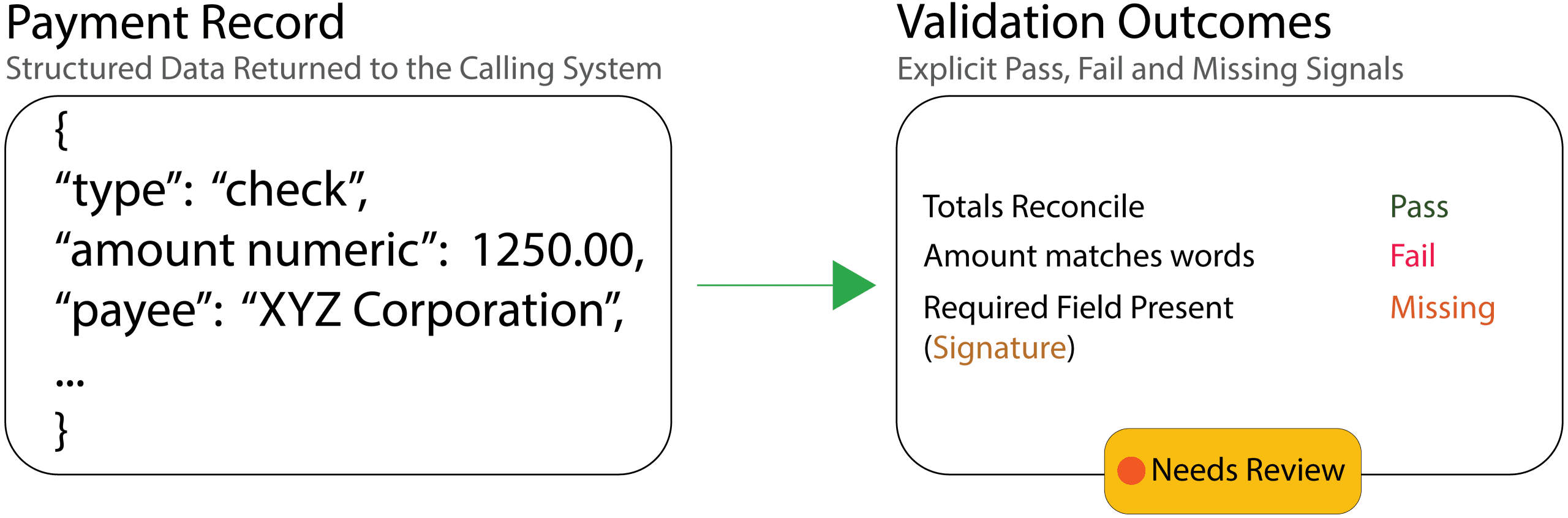
Numeric values are compared across the document. Totals are reconciled. Required elements are verified for completeness and structural alignment.
Validation outcomes clearly identify passes, failures, missing fields, and conflicting information.
This allows downstream systems to process structured document data using explicit validation results instead of relying solely on manual review.
Confidence
Provides Confidence Scores
PowerDox ONE-INTELLIGENCE assigns confidence indicators to validated document outputs.
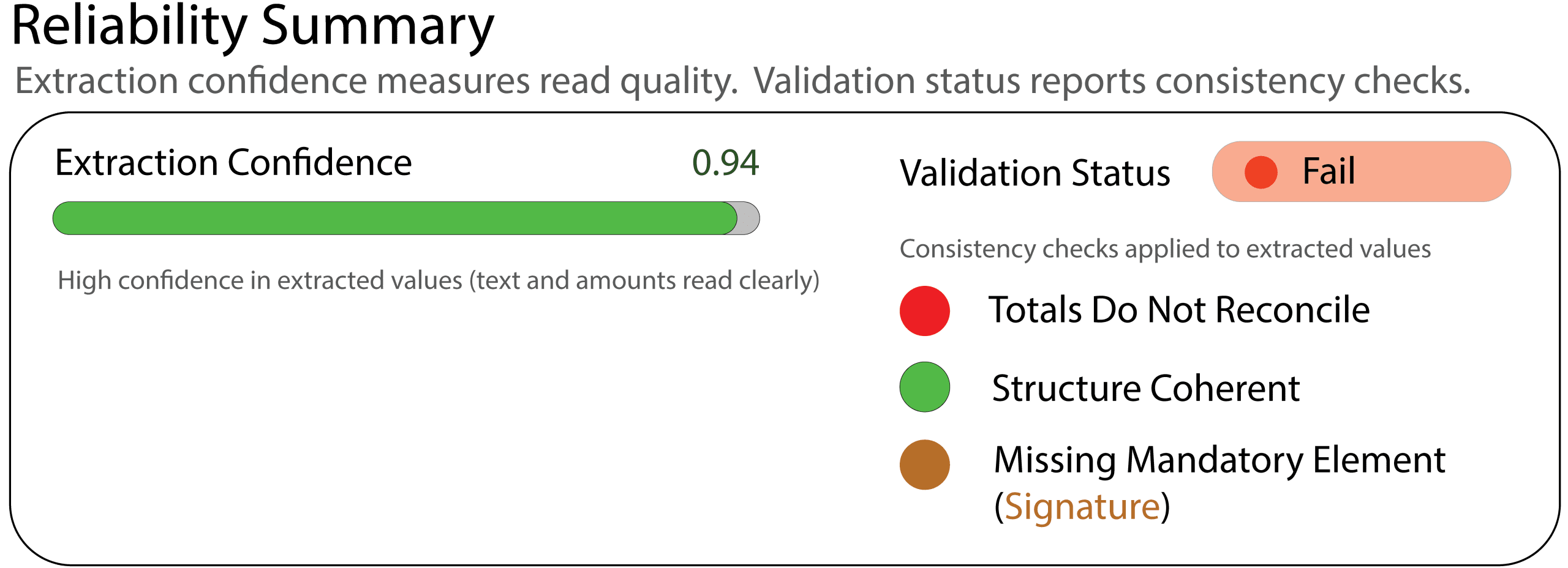
Confidence reflects extraction quality, structural consistency, and validation outcomes across the document.
When ambiguity, missing information, or inconsistencies are detected, those conditions are surfaced directly in the returned result.
Downstream systems receive both the structured data and the reliability signals required for automation, exception handling, and operational review.
Standardization
Delivers Standardized Output
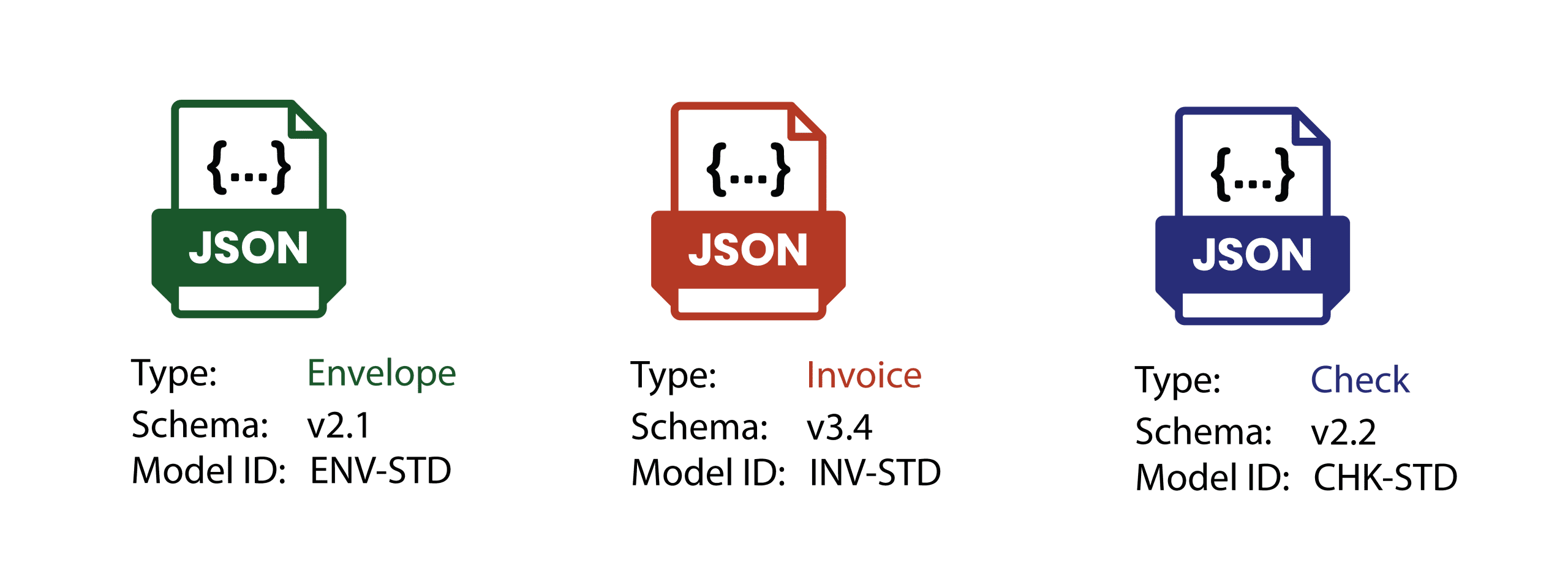
PowerDox ONE-INTELLIGENCE returns document data using consistent document-specific output models.
Checks, invoices, remittance documents, forms, correspondence, and other document categories each produce predictable structured schemas designed for downstream integration.
Document layouts may vary significantly, but the returned output model remains stable for each document category.
This allows integrations to operate against known structures instead of individual document layouts or formatting variations.